
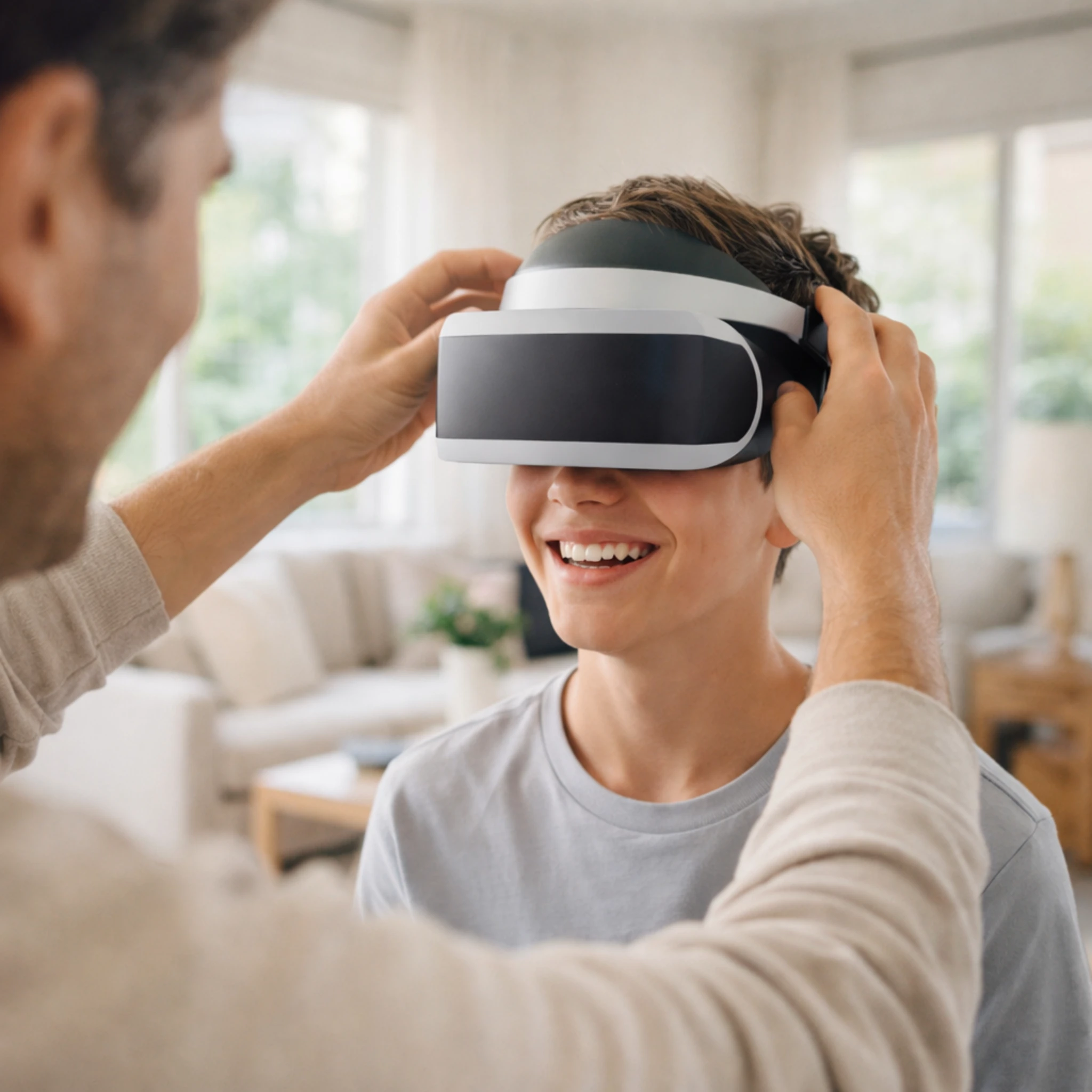
VR headsets are the new smartphones. What matters now is not just whether kids use them, but whether the safety systems around them actually keep up.
Virtual reality is no longer just a holiday gift for gamers. In 2026, spatial computing is where teenagers hang out, study, and socialize. As Meta’s Reality Labs continues to push headsets like the Quest line into the mainstream, the conversation around Social Media on child safety 2026 has officially moved from flat screens to 3D worlds.
For years, parents felt behind the curve. The rules of engagement in a fully immersive digital room are vastly different from scrolling a feed on a phone. The risks of unmoderated voice chat, physical spatial awareness, and realistic avatars forced regulators and tech giants to scramble.
But this is where things change. Following new federal guidelines and immense public pressure, Meta has overhauled how it handles young users. The real question now is whether these new boundaries are enough, or just cleaner digital band-aids.
Strict AI-driven age estimations now gate mature Horizon Worlds instantly.
Profiles for users under 16 are entirely hidden from non-approved contacts by default.
Headsets pause experiences if kids physically bypass their drawn safe-play zones.
Parents can now block all unknown voice chats system-wide from their own phones.
Snapshot: The 4 Big Safety Shifts
Age Verification
Strict AI-driven age estimations now gate mature Horizon Worlds instantly. That matters because account age is no longer just what a child types in during setup.
Default Zero
Profiles for users under 16 are entirely hidden from non-approved contacts by default. The product now assumes privacy first instead of making parents search for it later.
Boundary Lock
Headsets pause experiences if kids physically bypass their drawn safe-play zones. That takes safety beyond online behavior and into real-world movement.
Voice Muting
Parents can now block all unknown voice chats system-wide from their own phones. For many families, this is the feature that changes daily use the most.
What Happened: The Reality Labs Evolution
The transition from reactive patching to proactive protection did not happen overnight. As parents learned how to set up parental controls, Meta was quietly restructuring the core of Reality Labs. The interface became simpler, but the real change went deeper than menu design.
The chart above tells a clear story. In 2022, parental controls were buried in menus. Today, they are mandatory during initial setup, which means safety by design has started replacing safety by discovery.
Timeline of Events
Key Risks and Opportunities
Even with robust tools, the metaverse presents unique challenges. Understanding age verification laws is only the first step. The bigger issue is how kids actually use VR compared with what parents fear most.
Notice the disconnect. Parents heavily fear unmoderated voice chats, yet the majority of youth VR time is spent in solo gaming and approved educational spaces. The safer framing is not locking the device down completely, but managing access to the parts that behave most like social media.
What People Are Getting Wrong
“I cannot control what they hear.”
That assumption used to feel true for many parents. In 2026, it is much less true because Meta now allows unknown voices to be muted by default.
You can control it now
How AI moderation works in VR has evolved to detect toxic audio in real time and send immediate alerts to the parent dashboard. That makes the system much more active than it used to be.
“Screen time does not matter in VR.”
This misses the physical side of immersive devices. VR adds eye strain, fatigue, and movement-based stress that regular screens do not.
Limits matter more, not less
Screen time limits for spatial computing are distinct from flat-screen rules. Parents can now set hard daily limits that black out the headset display when time expires.
The VR Safety Breakdown: Then vs. Now
| Feature | 2023 Standard | 2026 Reality Labs Update |
|---|---|---|
| Account Creation | Honor system (easily faked DOB) | AI age estimation & mandatory parent link for under 13 |
| Stranger Contact | Open by default in social apps | Auto-muted and invisible to adults by default |
| Purchase Control | Pin required (if set up) | Push notification approval to parent’s phone |
Key Takeaway
Child safety in Reality Labs has shifted from a “wild west” environment to a far more structured, parent-first ecosystem. What matters most now is whether parents actually use the Family Center dashboard instead of assuming the hardware is unsafe out of the box.



